Teams were spending hours digging through shared folders, documents, and chats — often for answers that already existed. traditional search didn’t help. we needed a private, reliable, ai-powered way to ask questions and get answers from the knowledge teams already had
I led the design of team brain - from a vision to reality in less than 4 weeks. An ai-powered search experience that gives teams direct answers from their own documents, not just links.
4 weeks
Time
2
Reserach Studies
customer roundtables
Status
staff rollout
Phase
my role
- led the vision and discovery work that got founder buy‑in
- worked in a tight team of 5 (principal engineer, front/back‑end eng, pm) to launch a staff beta in just four weeks
- planned and ran experiments to validate concepts and measure impact
- conducted user testing to refine interaction patterns and latency affordances
- presented at an enterprise customer roundtable to gauge market interest and adoption potential
how it works
ask questions in plain language
no keywords — just ask like you would in chat. no more digging through documents.
ai interoperability
interweaving different contextual intents through the same ai workflows (search > chat).
knowledge, extracted
helps pulls insights from docs, designs, whiteboards etc to form a shared knowledge base across teams.
contextual answers
provides direct answers with relevant context, not just document links. Shows where information came from and when it was last updated.
one place for all questions
supports external knowledge sources to keep answers unified and searchable for large teams.
Future vision of bringing modes of ai-powered search
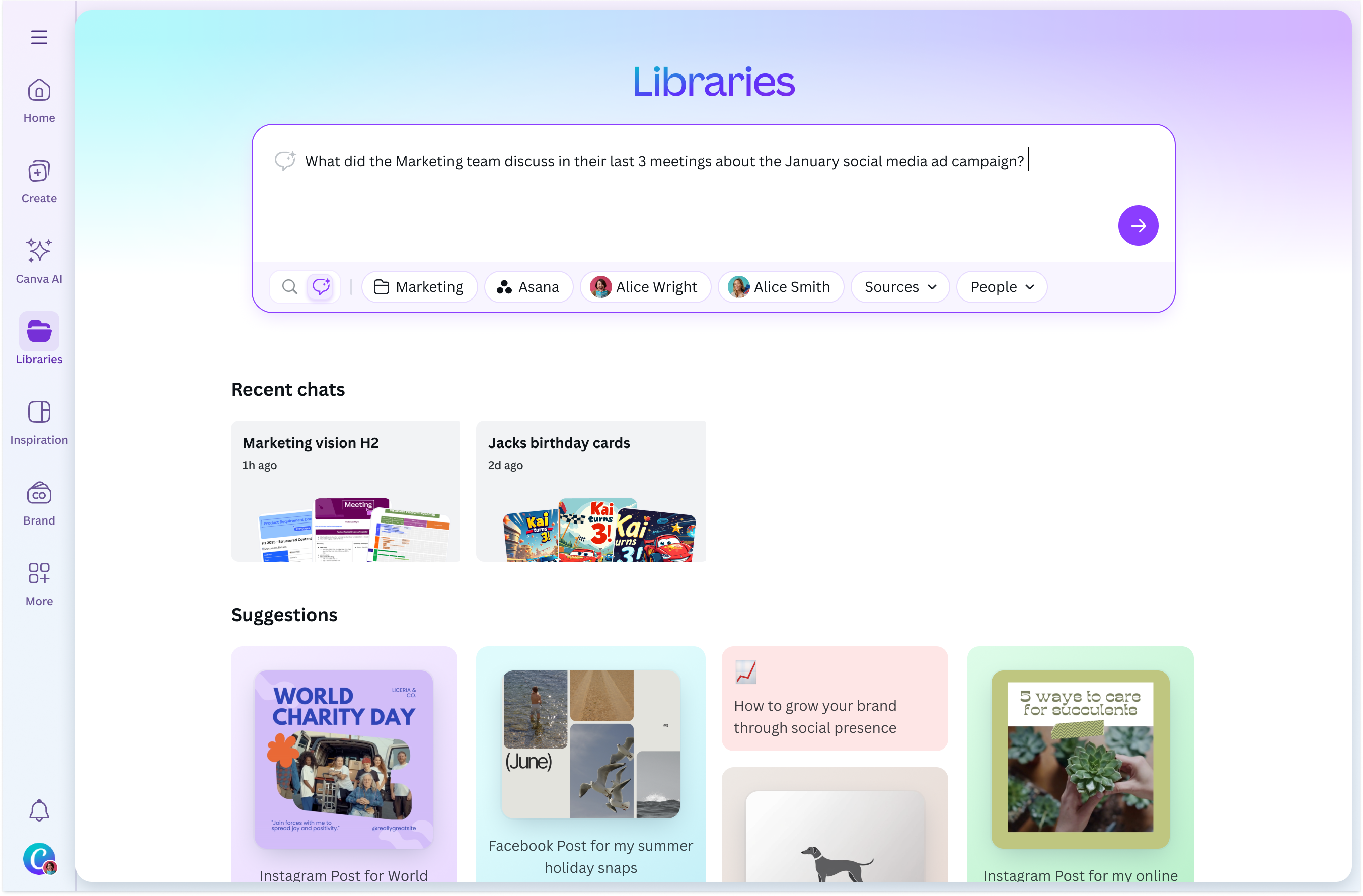
educational driven defaults for ai-search suggestions
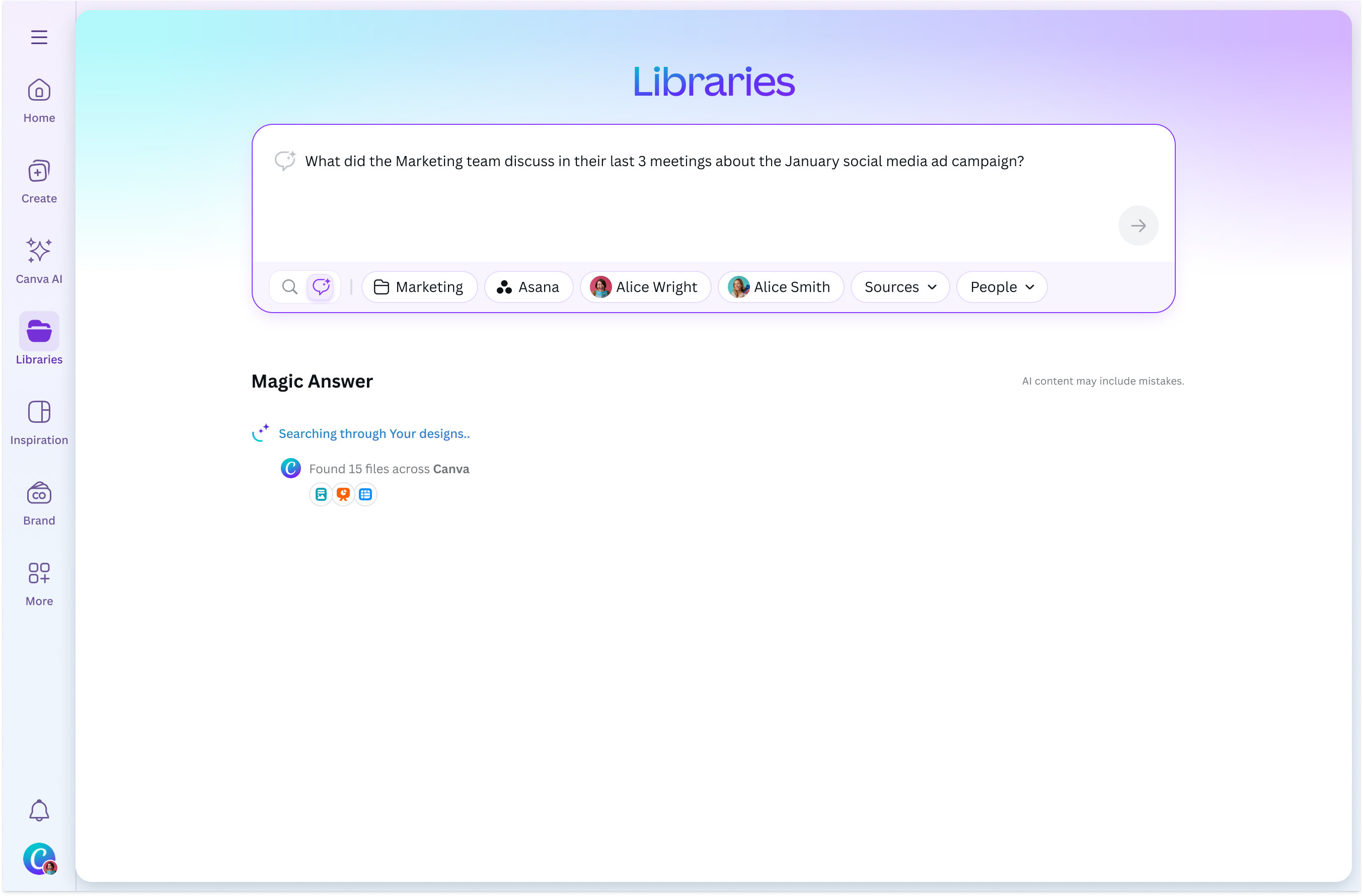
seperate search and chat modes
what I learned
search is unpredictable and fragile
people expected perfect answers — designing for uncertainty became the real design challenge.
small teams can ship big ideas
with the right alignment, a few focused people can build production ready capabilities fast.
natural language beats keywords
once internal staff saw that search could infer nl intent, we saw a sizable shift in keywords v.s nl queries
latency didn't stop us
even with small latency, internally teams have valued the depth of answers, where discovery trumped speed.